Flip is an editing technique and game in which the host or a performer signals a scene to "flip" to a parallel scene, a different time period, or an alternate perspective. The flip creates juxtaposition between contrasting moments. The technique trains performers to hold multiple threads and make clean transitions.
Structure
Setup
- Two or more performers play a scene.
- A host or caller stands outside with the ability to call "flip."
- No specific preparation is required.
The Rule
- When the host calls "flip," the active scene is paused and the performers begin a parallel scene, a scene from a different time period, or an alternate perspective on the same events.
- "Flip" can return to a previous scene that was paused, or establish a new one.
- The host controls the direction of the flip: "flip back" returns to the previous scene, "flip forward" moves to a new one.
Scene Relationships
- The two or more scenes created by flipping may be causally connected (one scene shows the cause, another shows the effect), thematically related, or structurally parallel.
- The juxtaposition between the scenes is where the game's meaning lives: what does Scene A reveal about Scene B, and vice versa?
- Performers must hold both scenes simultaneously in mind, maintaining continuity across flips.
Variations
- The flip technique is used in long-form as a narrative device without a host caller, with performers managing the transitions themselves.
- The flip is used with time: flipping between past and present versions of a relationship or event.
How to Teach It
How to Explain It
"When I call 'flip,' you pause where you are and immediately begin a different scene or a different point in time for the same scene. When I flip back, you pick up exactly where you left off. Hold both scenes in your body at the same time."
Common Notes
- Performers must remember exactly where they were physically and emotionally when the flip was called. Returning to a scene in a completely different state than where it was left breaks the continuity.
- The power of the technique is in the contrast. Flips that reveal nothing new about either scene waste the structural opportunity.
- As a training exercise, the director should call flips at moments of maximum tension, not at resolution. The unresolved tension carries across the flip and colors the other scene.
Common Pitfalls
- Performers do not hold the physical positions and emotional states from the paused scene. The return should feel like time stopped, not like a reset.
- The two scenes have nothing to say to each other and the flip becomes arbitrary interruption.
- Flips happen too frequently and neither scene accumulates enough content to be meaningful when revisited.
How to Perform It
Audience Intro
"We are going to play two scenes that cut between each other. When I call 'flip,' the scene you're watching pauses and another one begins. When I flip back, everything picks up exactly where it left off. Give us a suggestion for the first scene."
Cast Size
- Ideal: Two to four performers, split between the two scenes.
- Both scenes should have at least two performers to maintain independent momentum.
Staging
- Each scene occupies a defined area of the playing space so transitions are visually clear.
- Performers freeze in place during a flip and hold until the flip returns.
Wrap Logic
- The host ends both scenes when they have arrived at parallel buttons or when one scene's resolution illuminates the other.
Worth Reading
See all books →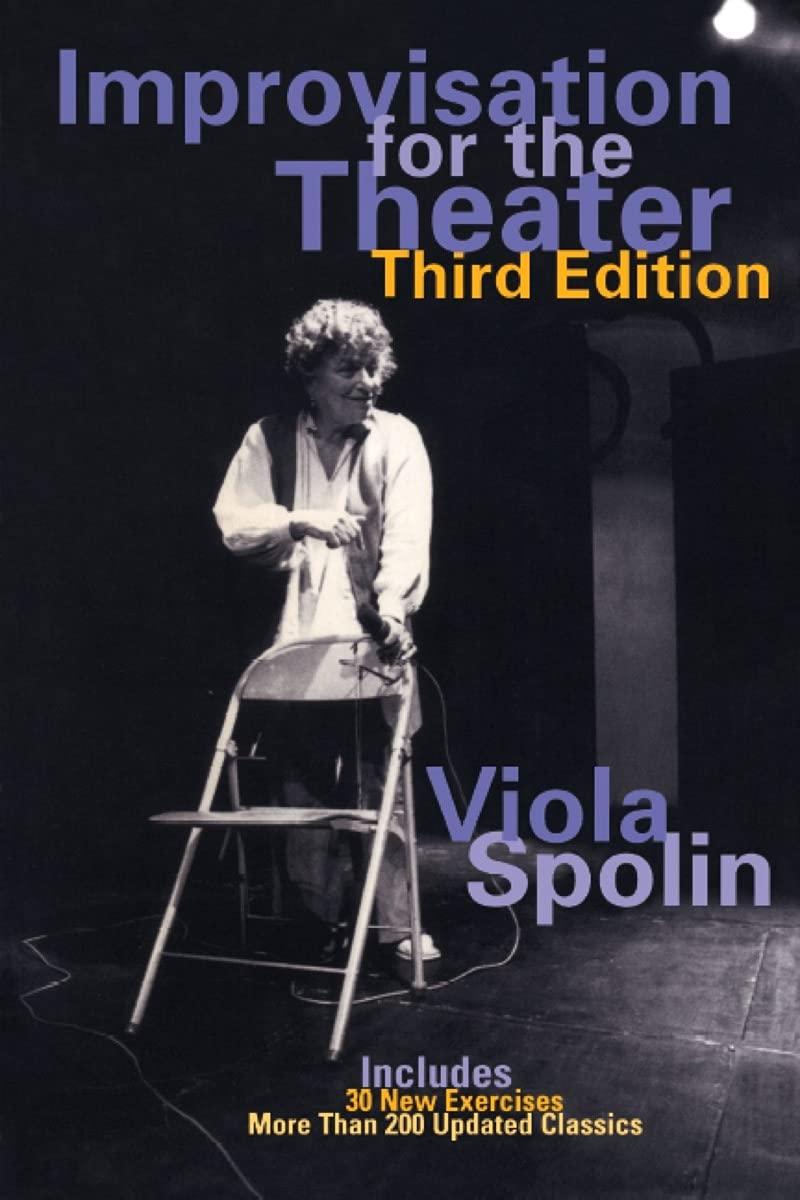
Improvisation for the Theater
A Handbook of Teaching and Directing Techniques
Viola Spolin
The Improvisation Game
Discovering the Secrets of Spontaneous Performance
Chris Johnston
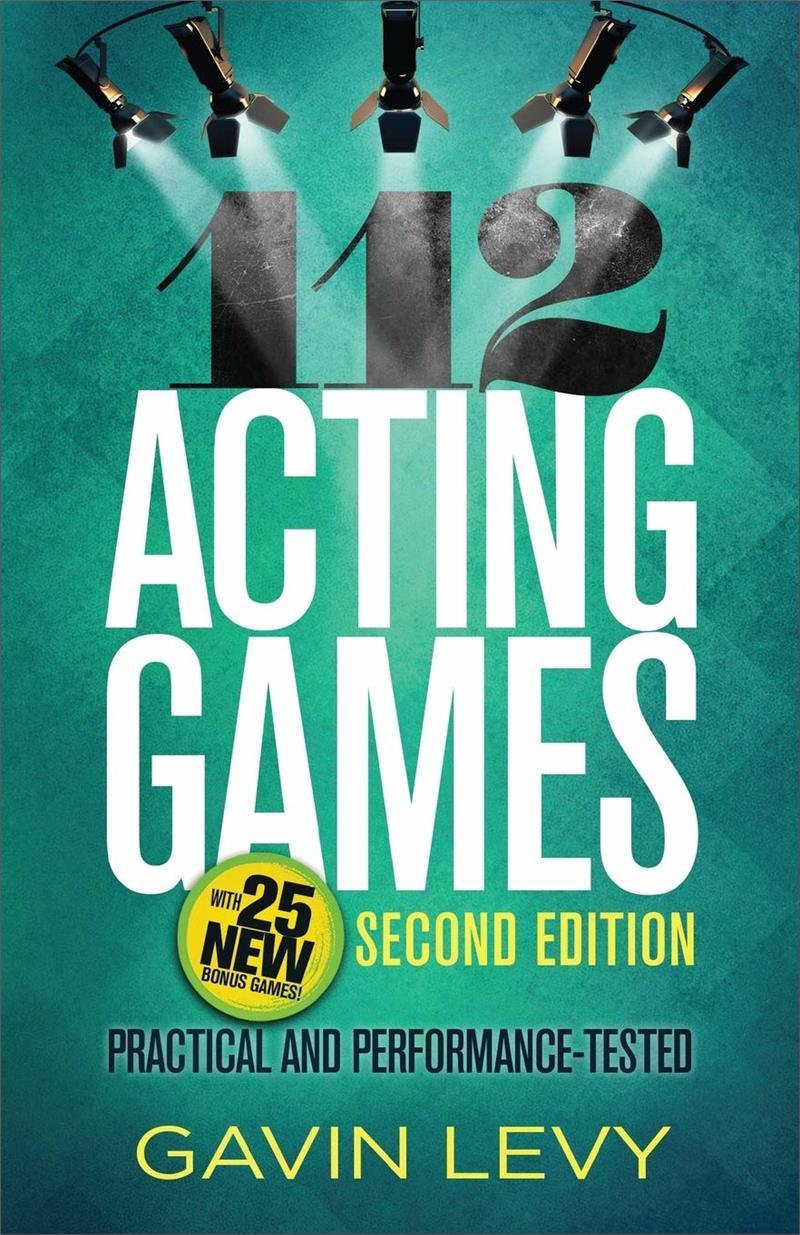
112 Acting Games
Gavin Levy
Theater Games for Rehearsal
Viola Spolin
Impro for Storytellers
Keith Johnstone

Improvising Now
A Practical Guide to Modern Improv
Rob Norman
Related Games
Cut
Cut is an editing technique used as both a game mechanic and a training exercise. A caller says "cut" to end a scene and immediately begin a new one, or to replay a moment with a different choice. When practiced as an exercise, it trains performers to recognize scene endings and to make clean, decisive transitions.
Backwards Scene
Backwards Scene is a short-form game in which performers play a scene from its final moment to its first. Each exchange must logically precede what the audience has already seen, creating a reverse-engineered narrative that rewards careful physical and verbal continuity.
Meanwhile
Meanwhile is a short-form game in which multiple scenes run in parallel, connected by the transitional word that gives the game its name. When a player or host calls the transition, the current scene freezes and a new scene begins in a different location, time period, or context. The game trains performers in quick context-switching, scene memory, and the ability to pick up a frozen scene exactly where it left off. Callbacks and connections between the parallel storylines elevate the game from a scene-switching exercise into a web of interlocking narratives.
Rewind/fast-Forward
Rewind/Fast-Forward is a short-form game in which a host controls the speed and direction of a scene using imaginary playback buttons. "Fast-forward" accelerates the action into the future, "rewind" reverses it, and "play" resumes normal speed. The game demands strong physical commitment and the ability to maintain scene logic across temporal jumps.
Change
Change is a short-form game in which a caller says "change" at any point during a scene, forcing the last speaker to replace their most recent line with a new one. Repeated calls on the same line demand increasingly creative alternatives. The game trains verbal agility and the ability to generate multiple options for any moment.
How to Reference This Page
The Improv Archive. (2026). Flip. Retrieved September 28, 2026, from https://improvarchive.org/games/flip
The Improv Archive. "Flip." The Improv Archive, 2026. https://improvarchive.org/games/flip.
The Improv Archive. "Flip." The Improv Archive, 2026, https://improvarchive.org/games/flip. Accessed September 28, 2026.
The Improv Archive is a systemically maintained repository. The archive itself acts as the corporate author.