You Should, You Could, You Would
Participants reframe directive language ('you should') into collaborative forms ('you could'), exploring how word choice affects relationships.
Worth Reading
See all books →
Business Improv
Experiential Learning Exercises to Train Employees
Val Gee

When I Say This, Do You Mean That?
Enhancing Communication
Cherie Kerr; Julia Sweeney
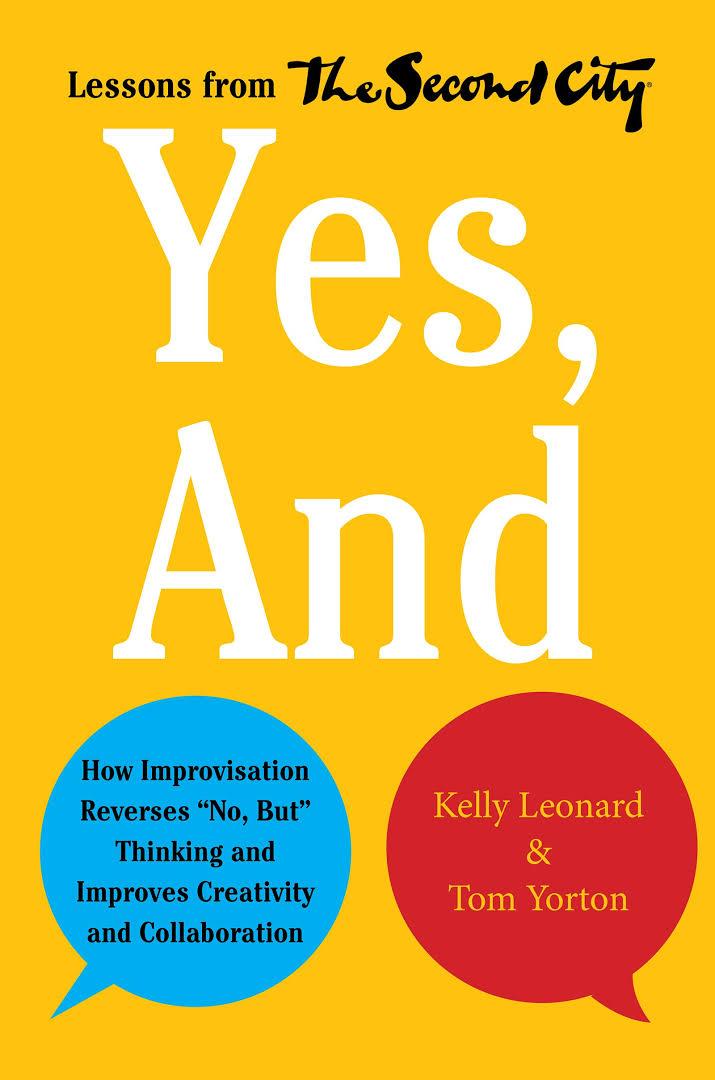
Yes, And
How Improvisation Reverses No, But Thinking and Improves Creativity and Collaboration
Kelly Leonard; Tom Yorton

The "Yes And" Business Evolution
Improv Skills for Leadership and Life
Tracy Shea-Porter

Great Group Skits
50 Character-Building Scenarios for Teens
Lynn Grasberg; Gina Oldenburg

Playing Along
37 Group Learning Activities Borrowed from Improvisational Theater
Izzy Gesell
Related Exercises
Yes But vs Yes And
Pairs plan an imaginary holiday. First responding with Yes, but then repeating with Yes, and. The contrast demonstrates how language affects collaboration and energy.
Yes But vs Yes And Conversation
Participants pair off and hold conversations starting every sentence with 'Yes, but...' then switch to 'Yes, and...' to experience how language choice impacts connection and energy.
Word Choice
Word Choice is an applied exercise in which participants reframe the same message using different word selections, discovering how specific word choices alter perception, emotional tone, and implicit authority, training precise language awareness and the ability to select words with intention rather than habit.
You Are Creative
In groups of three, participants take turns speaking Gibberish, English, and translating between the two, discovering their inherent creativity.
Word-at-a-Time Conflict
Participants build a conflict narrative one word at a time, exploring how conflict arises and can be navigated through collaborative storytelling.
Funny You Should Say That!
Funny You Should Say That is an applied improv exercise in which participants practice building enthusiastically on unexpected or challenging statements by finding and naming a genuine connection to their own experience or contribution. Rather than redirecting or correcting an unexpected statement, the participant responds with "Funny you should say that..." and then connects the unexpected statement to something real. The exercise develops cognitive flexibility, active listening, and the capacity to find genuine relevance in what was not anticipated.
The Lineage
Explore the schools and structures that influenced or evolved from You Should, You Could, You Would.
Business Improv (Gee & Gee)
How to Reference This Page
The Improv Archive. (2026). You Should, You Could, You Would. Retrieved October 15, 2026, from https://improvarchive.org/exercises/you-should-you-could-you-would
The Improv Archive. "You Should, You Could, You Would." The Improv Archive, 2026. https://improvarchive.org/exercises/you-should-you-could-you-would.
The Improv Archive. "You Should, You Could, You Would." The Improv Archive, 2026, https://improvarchive.org/exercises/you-should-you-could-you-would. Accessed October 15, 2026.
The Improv Archive is a systemically maintained repository. The archive itself acts as the corporate author.