Roger Bowen
Roger Bowen (May 25, 1932 to February 16, 1996) was an American actor, writer, and novelist who co-founded both the Compass Players and The Second City in Chicago, helping establish the institutional foundations of American improvisational theater. He is best known for originating the role of Lieutenant Colonel Henry Blake in Robert Altman's film MAS*H (1970), and he authored eleven novels, viewing himself primarily as a writer who occasionally acted.
Bowen was born in Providence, Rhode Island, and studied English at Brown University before attending graduate school at the University of Chicago. While writing theater reviews for The Chicago Maroon, he was drawn into the improvisation scene that was developing around the university.
Bowen became involved with the Compass Players, the improvisational troupe co-founded by David Shepherd and Paul Sills in 1955 at a storefront theater near the University of Chicago campus. He wrote promotional material, ran the Compass on dark Monday nights by booking debates and folk music acts, and performed alongside Elaine May, Shelley Berman, Alan Arkin, and Mike Nichols. When the Compass disbanded, Bowen was among the performers who helped launch The Second City at 1608 North Wells Street in late 1959.
Bowen served in the U.S. Army's Counter Intelligence Corps as a special agent, posted to the 441st CIC Detachment in Beppu, Japan, and later transferred to Korea for counterintelligence operations during the post-armistice period.
His film debut came with Petulia (1968), but his breakthrough arrived with the role of Lieutenant Colonel Henry Blake in Robert Altman's MASH (1970). The role drew on Bowen's own military experience and his improvisational comfort with ensemble performance, fitting naturally into Altman's collaborative directing style. After MASH, he appeared as Hamilton Majors Jr. on the TV sitcom Arnie (1970 to 1972) and had roles in films including Heaven Can Wait (1978), Zapped! (1982), and What About Bob? (1991). Television credits include House Calls (1979 to 1982) and At Ease (1983).
Throughout his acting career, Bowen maintained a parallel life as a novelist. He wrote eleven books, including Inga (1979) and The Silent Fifties (1995), and considered writing his primary vocation. He was married to Ann Raim, a theater director, and had three children.
Bowen died of a heart attack on February 16, 1996, while vacationing in Marathon, Florida, at age 63. His death came one day after that of McLean Stevenson, who had played the same character in the MAS*H television series. Because of this coincidence, Bowen's family delayed the announcement of his death by a week to avoid confusion between the two actors.
Historical Context
Bowen's involvement with both the Compass Players and The Second City places him at the origin point of American improvisational theater. The Compass Players, which operated from 1955 to 1958, was the first professional improvisation-based theater company in the United States, and its evolution into The Second City in 1959 established the institutional model that would shape comedy for the next seven decades.
Bowen's role in these companies was distinctive: he functioned as both a performer and an organizational figure, writing promotional material and managing logistics while also participating in the improvisational performances themselves. His connection to the University of Chicago intellectual community, where the Compass originated, reflected the academic roots of the American improv movement and its origins in Viola Spolin's theater games, Neva Boyd's group dynamics work, and Paul Sills's vision for a people's theater. Bowen's co-founding role at both the Compass Players and The Second City makes him one of the most historically significant institutional contributors in American improvisational theater: the only person documented as a co-founder of both organizations. The Compass Players (1955) represented the first institutional experiment in long-form ensemble improvisation derived from the Spolin tradition and the University of Chicago intellectual environment, while The Second City (1959) formalized that experiment into the performing institution that has trained and produced American comedy talent for more than six decades. Bowen's presence at both founding moments gives him a historical position at the origin point of the organizational lineage that defines the dominant tradition in American improvisational comedy.
Legacy
Bowen's significance lies in his presence at the founding moments of both the Compass Players and The Second City, the two institutions most responsible for establishing improvisation as a professional art form in America. While his film career is remembered primarily through MAS*H, his contributions to the organizational infrastructure of early Chicago improv were foundational.
The coincidence of his death occurring one day after McLean Stevenson's created an unusual coda to his career, linking the two actors who portrayed Henry Blake across different media in a way that ensured Bowen's name would continue to surface in discussions of the MAS*H franchise. His dual identity as a writer and performer reflected the intellectual culture of the early Chicago improv scene, where the boundaries between writing, performing, and directing were deliberately fluid. Bowen's literary work extended the cultural influence of the Compass-Second City tradition beyond theatrical performance into American popular narrative. His connection to the university-educated intellectual culture of Chicago in the 1950s that nurtured both the Compass Players and the early Second City represents the original synthesis of intellectual rigor with improvisational spontaneity that both institutions have carried forward in different ways across subsequent decades. His career as actor, novelist, and comedy institutional co-founder reflects the breadth of the creative engagement that the Compass Players tradition attracted from its foundational members, and his specific contributions to the organizational structures of both companies are embedded in the institutional histories of American comedy's most durable professional organizations.
Recommended Reading
Books are ordered from the strongest direct connection outward to broader relevance.

Something Wonderful Right Away
An Oral History of The Second City and The Compass Players
Jeffrey Sweet

The Art of Chicago Improv
Short Cuts to Long-Form Improvisation
Rob Kozlowski

Theatrical Improvisation
Short Form, Long Form, and Sketch-Based Improv
Jeanne Leep

The Second City Unscripted
Revolution and Revelation at the World-Famous Comedy Theater
Mike Thomas

Long Form Improvisation and American Comedy
The Harold
Matt Fotis
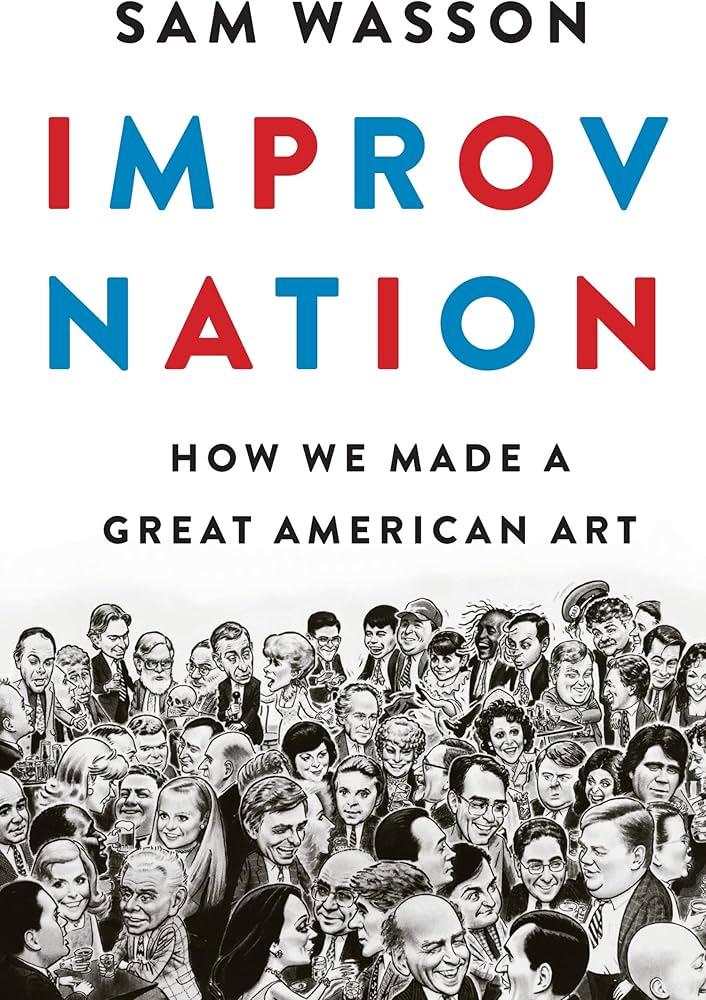
Improv Nation
How We Made a Great American Art
Sam Wasson
References
In the Archive
How to Reference This Page
The Improv Archive. (2026). Roger Bowen. Retrieved September 28, 2026, from https://improvarchive.org/people/roger-bowen
The Improv Archive. "Roger Bowen." The Improv Archive, 2026. https://improvarchive.org/people/roger-bowen.
The Improv Archive. "Roger Bowen." The Improv Archive, 2026, https://improvarchive.org/people/roger-bowen. Accessed September 28, 2026.
The Improv Archive is a systemically maintained repository. The archive itself acts as the corporate author.