Sheldon Patinkin (August 27, 1935, Chicago, to September 21, 2014, Chicago) was a director, producer, educator, and author who served as a central creative force at The Second City for over five decades and chaired the Theatre Department at Columbia College Chicago for nearly three decades. A founding member of the Playwrights Theatre Club alongside Paul Sills, Patinkin was hired as Sills's assistant on the day The Second City opened in 1959 and eventually succeeded him as artistic director. He authored the definitive institutional history, Second City: Backstage at the World's Greatest Comedy Theater (2000), and co-founded the Comedy Studies program with The Second City in 2007.
Patinkin was born in Chicago and entered the University of Chicago at a young age, earning a master's degree in English by the time he was nineteen. At the university, he formed friendships with Paul Sills, Mike Nichols, Elaine May, and other future architects of the improvisational theatre movement.
In the early 1950s, Patinkin co-founded the Playwrights Theatre Club with Sills and others from the University of Chicago community. The Playwrights Theatre Club became the incubator for the theatrical experiments that led to the Compass Players and eventually to The Second City. When Sills and Bernie Sahlins co-founded The Second City on December 16, 1959, Patinkin was hired as Sills's assistant and became the theatre's general manager.
Patinkin eventually succeeded Sills as artistic director of The Second City, purchasing Sills's shares in the company and becoming a permanent fixture of its creative leadership. Over more than fifty years, he directed numerous resident company shows, managed the touring company, and oversaw the editing of SCTV, the television series that brought Second City performers to a national audience. The Second City later described him as the institution's "artistic conscience."
Beyond Second City, Patinkin discovered the early Steppenwolf Theatre Company and became its artistic consultant. He co-founded The School at Steppenwolf, where he taught for seventeen years and mentored actors including John Malkovich, Laurie Metcalf, and Gary Sinise, all of whom became major figures in American theatre and film.
Patinkin chaired the Theatre Department at Columbia College Chicago for nearly thirty years, becoming Chair Emeritus in 2009. At Columbia, he shaped the training of future Broadway directors including David Cromer and Anna Shapiro. In 2007, he co-created the Comedy Studies program in partnership with The Second City, establishing what became the first undergraduate degree program combining academic study with professional comedy training.
Patinkin authored Second City: Backstage at the World's Greatest Comedy Theater, published by Sourcebooks in 2000 and later updated for the company's sixtieth anniversary. The book provided the first comprehensive institutional history of The Second City, drawing on Patinkin's firsthand knowledge of the company from its founding. He also wrote No Legs, No Jokes, No Chance: A History of the American Musical Theater, published by Northwestern University Press in 2008.
Historical Context
Patinkin's presence at The Second City from its opening night in 1959 through the 2010s made him the institution's longest-serving creative leader and its primary keeper of institutional memory. His career spanned the company's entire history, from the founding era with Sills and Sahlins through the golden age of the 1970s and 1980s that produced John Belushi, Dan Aykroyd, and Bill Murray, to the contemporary period that trained Tina Fey, Stephen Colbert, and Steve Carell.
His role as artistic consultant at Steppenwolf connected two of Chicago's most important theatrical institutions. Steppenwolf's ensemble approach, which emphasized long-term creative partnerships and risk-taking performance, shared philosophical roots with Second City's improvisational ensemble model. Patinkin served as a bridge between the two traditions, bringing his understanding of ensemble dynamics from the improv world to Steppenwolf's dramatic work.
The Comedy Studies program at Columbia College Chicago, which Patinkin co-created with The Second City in 2007, represented the formalization of comedy and improvisation as academic disciplines. The program was among the first to offer an undergraduate degree that combined theoretical study of comedy with practical training at a professional institution, creating a model that other universities would later adopt.
Patinkin's death on September 21, 2014, at age seventy-nine, removed the last direct connection to The Second City's founding generation. The New Studio Theater at Columbia College Chicago was renamed the Sheldon Patinkin Theater in his honor, and the school established a scholarship in his name.
Legacy
Patinkin's legacy operates across three interconnected institutions. At The Second City, his five decades of creative leadership provided continuity through multiple generations of performers and directors, maintaining the company's artistic standards and institutional culture even as the ensemble turned over dozens of times. His book Second City: Backstage at the World's Greatest Comedy Theater remains the definitive history of the institution and the primary written record of its artistic evolution.
At Steppenwolf, his mentorship helped develop actors who became defining figures of late-twentieth-century American theatre and film. The connection he maintained between Second City's improvisational world and Steppenwolf's ensemble dramatic tradition demonstrated how the skills cultivated in improv, including ensemble trust, spontaneous response, and commitment to moment-to-moment truth, could transfer directly to scripted performance at the highest level.
At Columbia College Chicago, his nearly three decades as department chair shaped the training of hundreds of theatre professionals. The Comedy Studies program he co-created with The Second City established a new category of academic program that formalized the relationship between professional comedy training and university education. His influence extended through the directors, actors, and educators who passed through his classroom and carried his approach to ensemble training into their own institutions.
Companies and Organizations
Associated venues and institutional relationships currently documented in the archive.
Recommended Reading
Books are ordered from the strongest direct connection outward to broader relevance.

Something Wonderful Right Away
An Oral History of The Second City and The Compass Players
Jeffrey Sweet

The Art of Chicago Improv
Short Cuts to Long-Form Improvisation
Rob Kozlowski

Theatrical Improvisation
Short Form, Long Form, and Sketch-Based Improv
Jeanne Leep

The Second City Unscripted
Revolution and Revelation at the World-Famous Comedy Theater
Mike Thomas
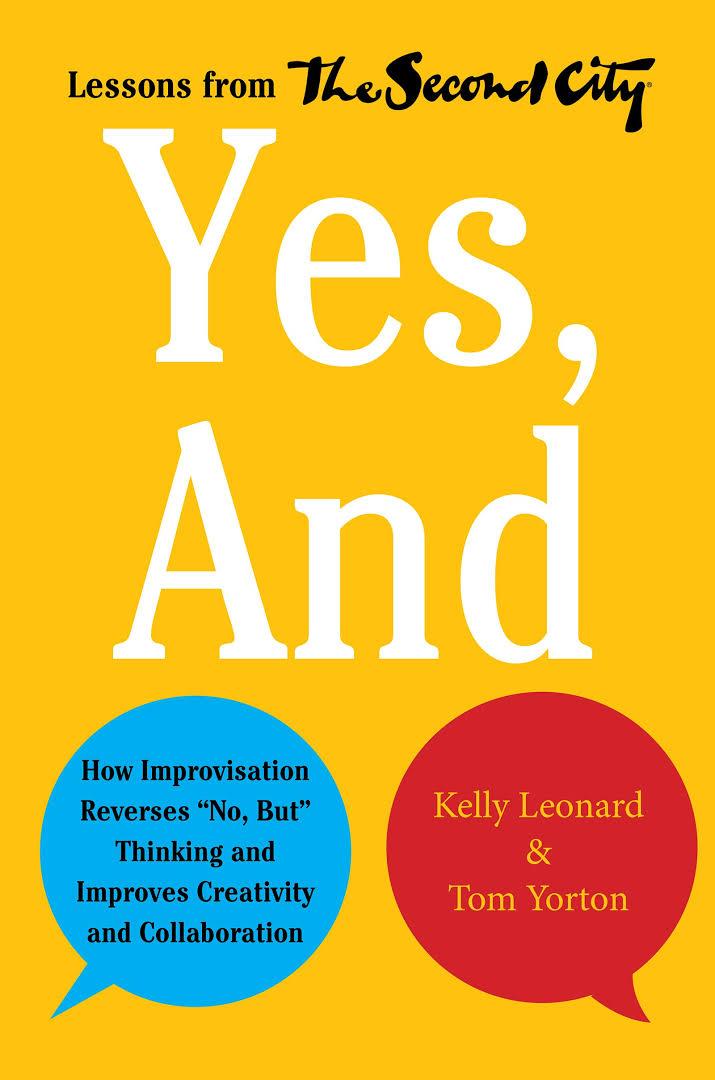
Yes, And
How Improvisation Reverses No, But Thinking and Improves Creativity and Collaboration
Kelly Leonard; Tom Yorton

Embodied Playwriting
Improv and Acting Exercises for Writing
Hillary Haft Bucs; Charissa Menefee
References
In the Archive
How to Reference This Page
The Improv Archive. (2026). Sheldon Patinkin. Retrieved September 28, 2026, from https://improvarchive.org/people/sheldon-patinkin
The Improv Archive. "Sheldon Patinkin." The Improv Archive, 2026. https://improvarchive.org/people/sheldon-patinkin.
The Improv Archive. "Sheldon Patinkin." The Improv Archive, 2026, https://improvarchive.org/people/sheldon-patinkin. Accessed September 28, 2026.
The Improv Archive is a systemically maintained repository. The archive itself acts as the corporate author.